

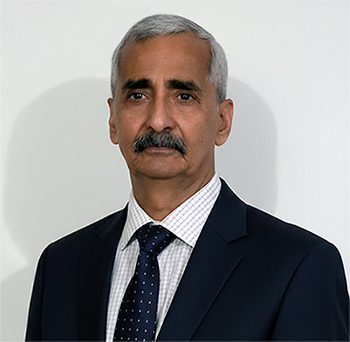
Dr. Indra Nath Chakraborty, Technical Consultant, Calderys India Refractories Ltd. is a renowned global expert on refractories especially refractories for cement kilns. Here he speaks to Indian Minerals about the various challenges associated with recycling of used refractories retrieved from cement kilns.
IM: What are the key challenges of recycling of refractories used in cement kilns?
INC: Cement kiln operating environment is different from that of the other industries. In the majority of the industry segments, only the refractory hot face gets contaminated by foreign constituents originating from the process. The conditions in a cement kiln are significantly different from other industries, which is primarily due to the “volatile cycle” within the kiln. Volatile Cycle is the reason why alkali, chloride and sulfur concentrations in the kiln environment cannot be “estimated” by their concentration in raw materials and fuels. Their concentrations are multifold higher than those indicated by the input materials in the kiln. The situation has aggravated owing to the usage of AFR (Alternate Fuel and Raw materials). In fact, modern cement kilns are virtually being used as incinerators. The vapor pressure of the alkali chloride and alkali sulfate compounds, at the kiln operating temperature, is high. As a result, these compounds penetrate into the bulk of the refractories. Unlike other industries, the contamination of refractories used in cement kilns is not limited only to the surface. In short, selection of contamination – free recycled refractories from cement kilns are a true challenge.
IM: As cement consumers nowadays are extremely stringent about quality standards, to what extent can recycled raw materials replace virgin raw materials in the refractories for cement kilns?
INC: The fact is – recycled material-based refractories are unlikely to have any significant impact on the quality of cement. On the contrary, AFR usage in the cement kiln results in a fairly large number of non–cementitious phases in the cement clinker. These non – hydraulic phases may leach out alkali, chlorine, etc., when in contact with water. These foreign species would alter the setting, strength development characteristics, as well as the ultimate strength of cement. The contribution of these constituents from the recycled material-based refractories will be insignificant. The AFR selection as well as adjustment of the additive concentration during the clinker grinding process would be far more critical for maintaining the cement quality. Apart from the cement quality, when the volatile compounds from cement are leached out, concrete degradation is a likely possibility owing to alkali – aggregate reaction as well as corrosion of the reinforcement steel.
IM: You are well aware of European practices of refractories recycling vis-a-vis Indian. What are your observations in this regard?
INC: Until now our primary focus has been on contaminants deposited on the refractory hot face and their removal. In Europe, the added focus now is the concentration of heavy metal in recycled refractories, especially if they originate from the cement industry. Heavy metal deposition in recycled material, thus, has also been a focus on the environment protection front.
Apart from the above, the process for generation as well as utilization of recycled materials are far more organized in Europe than ours. Apart from the commercial agreement between the refractory user industries as well as recycled material suppliers, the facilities at the recycled material supplier end are more sophisticated in Europe. The removal process of the contaminated part of the used refractories is fairly precise. This enables higher recovery as well as greater quality consistency of the recycled materials. The laboratories of European recycled material suppliers are well equipped with analytical facilities. This is an important aspect of maintaining the quality consistency of recycled materials.
IM: Can you please educate our readers about recent technological happenings that took place in the context of recycling of refractories retrieved from cement kilns?
INC: As has been explained earlier, penetration of volatile components in the kiln is a major concern. All these constituents would act as flux for refractories. As a consequence, high temperature properties are likely to be affected adversely. This effect is obvious for bricks as well as monolithic formulations. The major effect of these components would be visible during the installation of castable, if the alkali / alkaline earth ions leach out when in contact with water. This may result in reduction in flow as well as setting time. Unless the selection process of recycled refractories originating from cement kiln is appropriate, their incorporation in castable formulations may result in quality degradation.
IM: Thank you for talking to us and congratulations for becoming Distinguished Life Member of UNITECR.
INC: You’re welcome.